
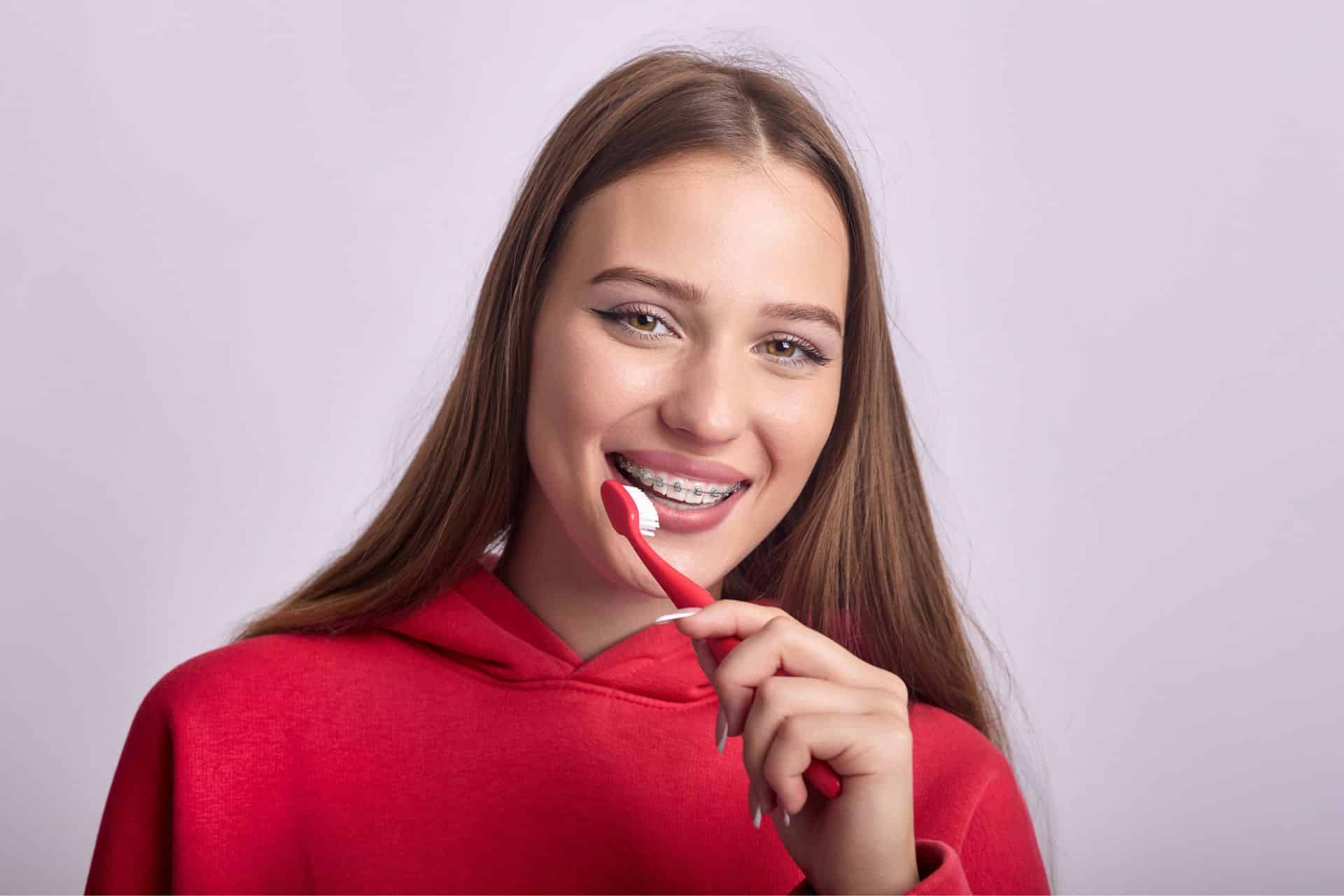
This guide breaks down the fastest ways to brush, floss, and care for your teeth while wearing braces, so you always feel confident about your oral hygiene.
Why Is Cleaning More Important with Braces?
Braces add brackets, wires, and small spaces where food and plaque can easily get stuck. Because these areas are harder to reach, cleaning becomes more important to keep your teeth and gums healthy. Without careful brushing and flossing, you may experience:
- Plaque buildup around brackets
Food particles cling to brackets and wires, creating spots where plaque forms quickly. - Decalcification or white spots
When plaque stays on the tooth surface too long, it can weaken enamel and leave permanent white marks after braces are removed. - Gum irritation or swelling
If plaque collects along the gumline, the gums may become puffy or inflamed. - Bad breath
trapped food and bacteria can cause persistent odor that does not go away with quick brushing. - Higher risk of cavities
Hard to clean areas between brackets can lead to tooth decay if not cleaned daily.
Regular, thorough brushing and flossing help prevent these problems, protect your enamel, and allow your teeth to move efficiently during orthodontic treatment.
Can proper cleaning help treatment progress?
Yes. Healthy gums and clean teeth respond more predictably to orthodontic adjustments. Good hygiene helps braces work as efficiently as possible.
How should I brush with braces?
Efficient brushing focuses on angles and technique rather than scrubbing harder or faster.
Follow this quick and effective approach:
- Brush along the gumline to remove plaque where it forms most often.
- Angle the brush slightly downward above the brackets, then slightly upward below them.
- Move in small circular motions around each bracket to lift plaque.
- Brush the chewing surfaces and the backs of your teeth for a complete clean.
What Tools Make Cleaning Braces Faster?
Here are some of the most helpful tools patients often use for a fast, effective cleaning routine:
Interdental brushes
These tiny brushes slip under wires and around brackets to remove food immediately.
Perfect for:
- After meal cleanups
- Tight or hard to reach spaces
- Quick touch ups between brushing
Water flossers
A stream of water helps flush out debris from around brackets and between teeth.
Benefits include:
- Fast cleaning
- Gentle on gums
- Helps reduce plaque in areas floss may miss
Floss threaders
These guide regular floss under wires for a more detailed clean.
Orthodontic floss
This floss has a stiff end that slides easily under wires, making flossing simpler and faster.
Should I Use Mouthwash with Braces?
While not required, fluoride mouthwash offers strong benefits. It reaches areas brushing cannot and strengthens enamel around brackets.
What type should I choose?
Select a mouthwash that is:
- Alcohol free
- Fluoride based
- Designed for cavity protection
This supports long-term tooth health while your braces do their work.
What Foods Make Cleaning Harder with Braces?
Certain foods stick to braces more easily or increase the risk of breakage.
Avoid foods that:
- Stick (caramel, gummy candy)
- Crunch (chips, hard nuts, popcorn)
- Pull (chewy breads, bagels)
Choose braces-friendly options such as:
- Soft fruits
- Yogurt and smoothies
- Cooked vegetables
- Soft pasta dishes
- Eggs and soups
These foods reduce your cleaning time and help prevent bracket repairs.
What Is the Best Daily Cleaning Routine?
A simple routine helps you stay consistent without feeling overwhelmed.
Morning
- Brush for two to three minutes
- Use fluoride rinse if recommended
After meals
- Rinse with water
- Use an interdental brush to remove trapped food
Night
- Brush thoroughly
- Floss using your preferred method
- Finish with a mouthwash
Regular cleaning prevents buildup and avoids long cleaning sessions later.
Comparison Table: Fastest and Most Effective Tools
Cleaning Tool | Speed | Effectiveness | Best For |
Electric toothbrush | Fast | Very high | Daily brushing |
Manual toothbrush | Moderate | Good | Backup brushing |
Water flosser | Fastest | Very high | Sensitive gums, speed |
Floss threader | Moderate | Excellent | Deep cleaning |
Orthodontic floss | Moderate | Great | Daily flossing |
Interdental brush | Very fast | Good | After meals |
What Cleaning Mistakes Should You Avoid?
Avoiding these habits helps keep your teeth healthy throughout orthodontic treatment:
- Skipping flossing, which quickly leads to gum inflammation
- Brushing too aggressively, which irritates gums
- Using whitening toothpaste, which may cause uneven coloring
- Ignoring the back teeth, where food often hides
- Rushing through brushing, which leaves plaque behind
A few extra seconds of care make a significant difference.
Feel Confident Keeping Your Smile Clean
Maintaining clean teeth with braces is completely achievable with smart habits and the right tools. At Advanced Orthodontics in Bellevue, Dr. Barton Soper and his team are committed to helping you feel confident throughout your orthodontic journey. If you ever have questions about cleaning techniques or which products work best for you, the team is always available to help.
Schedule your consultation today to take the next step toward a healthy, beautifully aligned smile.
Frequently Asked Questions About Keeping Your Teeth Clean with Braces
Why does cleaning matter more when you have braces?
Brackets and wires trap food easily, increasing plaque buildup, enamel staining, gum irritation, and the risk of cavities if not cleaned thoroughly.
Can good brushing and flossing improve treatment results?
Yes. Clean, healthy gums allow teeth to move more effectively, helping treatment stay on schedule.
Which tools help speed up cleaning?
Interdental brushes, water flossers, floss threaders, and orthodontic floss make it easier to remove plaque and food around wires and brackets.
Is mouthwash helpful when wearing braces?
Fluoride mouthwash is a great addition because it strengthens enamel and reaches spots your toothbrush can’t.